Operating and improving an autonomous-agent team
Work does not end when a task closes: measure quality, adjust the rules, and turn learning into reusable capability.
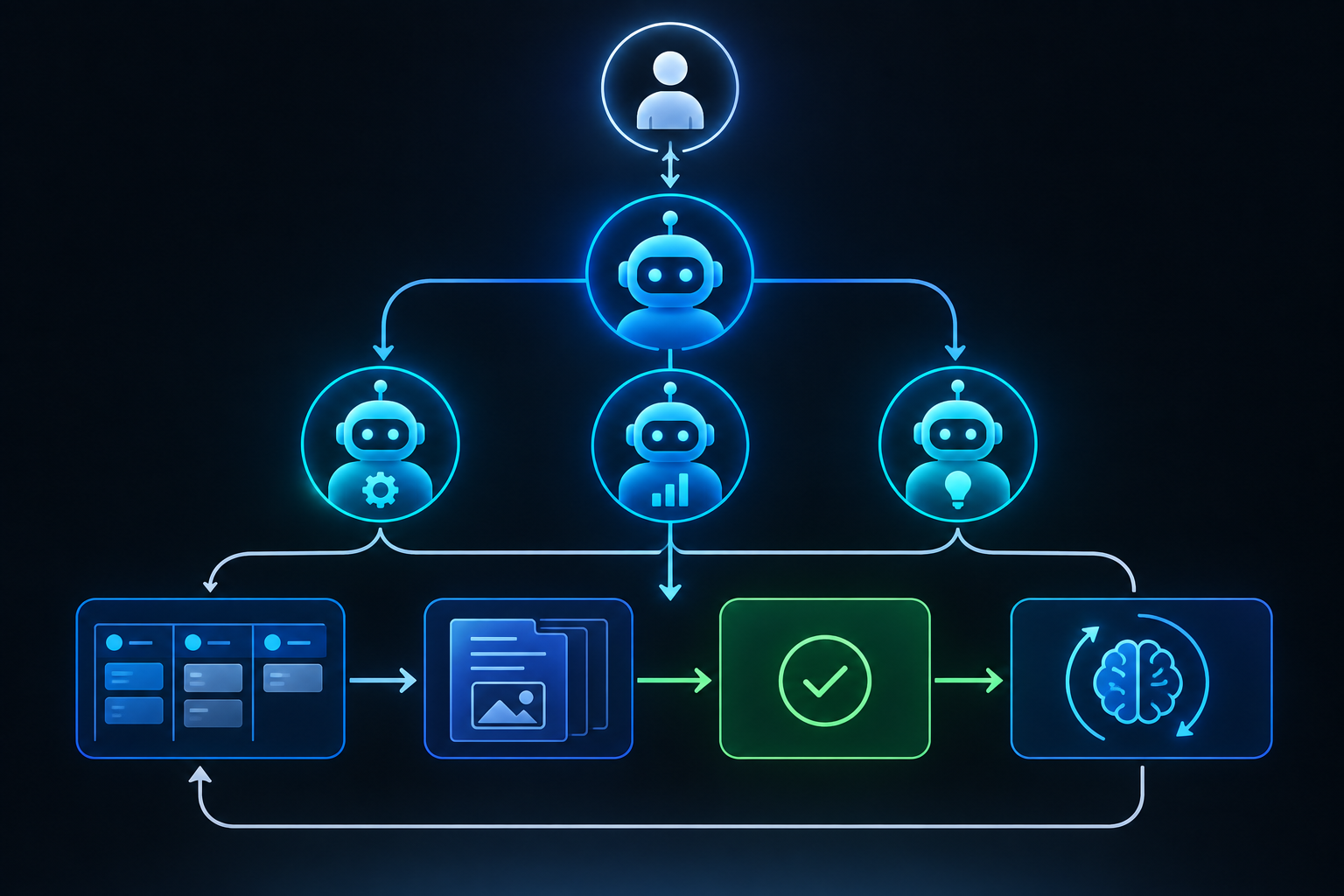
An agent cell needs an operating rhythm. Review its task flow weekly: time from assignment to delivery, work requiring correction, cost per outcome, and bottlenecks between roles.
The board is not decorative task tracking. It is the common source of truth: every task needs an expected outcome, attached evidence, an owner, risk level, and a definition of done. Without these, agents can complete activity without producing useful results.
When delivery fails, avoid blaming the model in the abstract. Review the goal, supplied context, available tools, acceptance criteria, and escalation route. Most problems are fixed in the design of the work system.
Keep human review for changes affecting customers, money, production, or sensitive information. Everything else should flow within clear boundaries, leaving people focused on direction and high-context decisions.
Turn successful patterns into shared instructions, templates, and skills. Over time, value lies not only in active agents but in the operational memory that lets the next team start from a better position.